
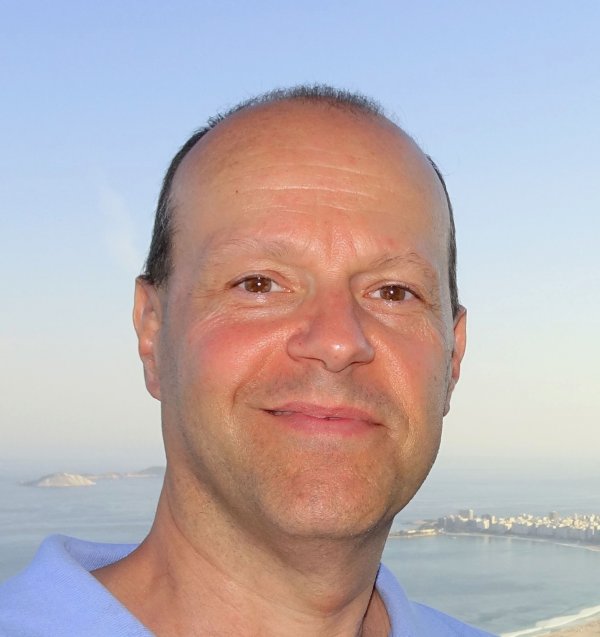
MASSEROLI MARCO
Associate professor
- Campus:Building 20
- Floor:1
- Office:055
- Ph.:3553
Marco Masseroli received the Laurea degree in Electronic Engineering from Politecnico di Milano, and the PhD degree in Biomedical Engineering from Universidad de Granada, Spain. He is Associate Professor at the Department of Electronics, Information and Bioengineering of Politecnico di Milano and co-Coordinator of the Master Degree in Bioinformatics for Computational Genomics joint between Politecnico di Milano and Università degli Studi di Milano.
He leads the Data Science for Bioinformatics lab of Politecnico di Milano, and the Computational multi-Omics of Neurological Disorders (MIND) Lab within the Joint Research Platform between Politecnico di Milano and Fondazione IRCCS Istituto Neurologico “Carlo Besta”.
He is lecturer of the courses "Bioinformatics and Computational Biology" and "ICT for Health Care" for the Masters of Science in Computer Science and Engineering and in Biomedical Engineering. He is an evaluator of research projects for the European Union and a reviewer for several international scientific journals.
He carried out research activities in the application of Information Technology to the medical and biological sciences in several Italian and international research centres. He has been also Visiting Faculty at the Cognitive Science Branch of the National Library of Medicine, National Institute of Health, Bethesda – USA, and Visiting Professor at the Departamento de Anatomía Patológica, Facultad de Medicina of the Universidad de Granada - Spain.
He is the author of more than 200 peer-reviewed papers on international journals and conference proceedings in the fields of Bioinformatics, Medical Informatics and bioimage processing and analysis.
His research is on Data Science and Artificial Intelligence applied to Medical Informatics, Bioinformatics and Computational Genomics, mainly in oncology, neurology and pharmacology. It is focused on biomedical data modeling, genomic databanks, controlled vocabularies and bio-ontologies to effectively retrieve, manage, query and share heterogeneous genomic, biomedical and clinical information, as well as on their integration with multi-modal, multi-omics and clinical data, for their comprehensive analysis with Machine Learning and Deep Learning approaches in support of digital health and personalized precision medicine.