
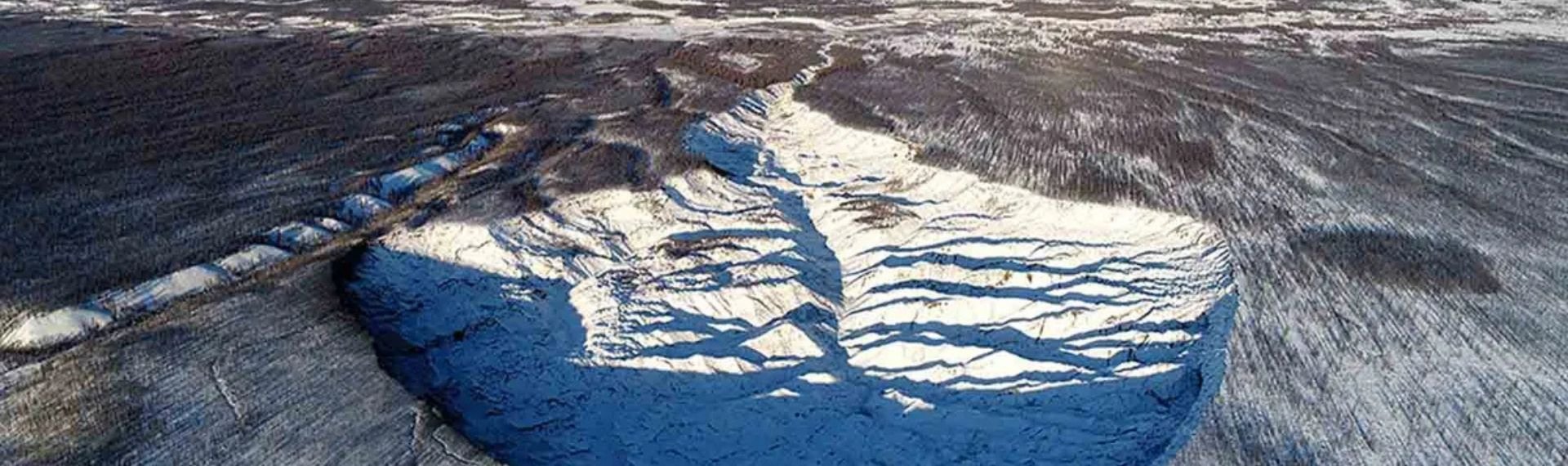
Credit: European Union, Copernicus Sentinel-2 imagery
The rapid degradation of permafrost in Arctic and subarctic regions, accelerated by climate change, may facilitate the spread of potentially harmful microorganisms over vast distances. This is the finding of a study conducted by Davide Stucchi, Lorenzo Mari, and Renato Casagrandi from the Department of Electronics, Information and Bioengineering at Politecnico di Milano, which analyses the risks associated with the atmospheric release of bacteria and pathogens that have potentially remained trapped in frozen soils for thousands of years.
In the study, published in Environmental Research Letters, researchers developed a quantitative model to estimate how these biological agents, released by thawing ground in Siberia, can be transported by atmospheric currents. The framework combines the probability of release—rising with permafrost thaw—with the exposure of human populations, crops, and livestock in regions reached from melting areas by atmospheric transport.
The results indicate that the risks are not limited to Arctic regions but extend to major urban centres and densely populated agricultural areas in Russia, China, and Japan. To identify the most vulnerable locations, the study introduces a new ranking method that jointly evaluates hazard and exposure without relying on subjective weighting.
The authors emphasize that, as permafrost thaw accelerates, the likelihood increases that ancient pathogens may come into contact with new host populations. They therefore call for improved monitoring of microorganisms in Arctic soils and the development of reliable models to identify and track emerging risk hotspots for human, animal, and plant health.