
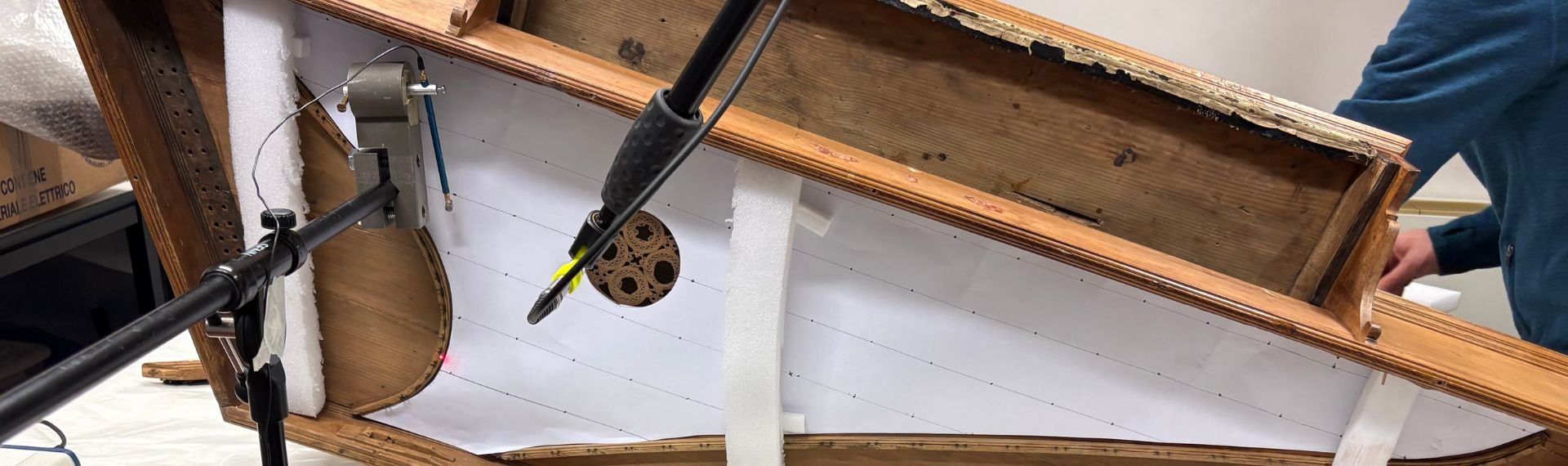
Through its Musical Acoustics Laboratory, the Department of Electronics, Information and Bioengineering at Politecnico di Milano is joining REM@KE – Reconstructing Embodied Musical Knowledge at the Keyboard, an ERC Synergy Grant project dedicated to historical keyboard instruments.
Politecnico di Milano and the Institute of Heritage Science of the National Research Council of Italy (CNR ISPC) are the two new beneficiaries of the project, joining the consortium led by the University of Pavia, the University of York, and the University of Gothenburg.
REM@KE develops Cognitive and Digital Organology (CaDO), an interdisciplinary framework combining organology, embodied cognitive science, artistic research, materials science, and acoustics to reconstruct the relationships between historical keyboard instruments and the composers and performers who created music with them. The project’s results will be shared through an open-access portal and through restored and reconstructed instruments, which will remain available as long-term research resources.
Based in Cremona, the Musical Acoustics Laboratory works at the intersection of acoustics, signal processing, computational methods, and musical instrument making, with a focus on the vibrational and acoustic characterisation of historical and contemporary instruments through non-invasive techniques.
Within REM@KE, the Department of Electronics, Information and Bioengineering at Politecnico di Milano will contribute specialised expertise in the vibroacoustic analysis of keyboard action dynamics, studying the mechanical response of components such as hammers, jacks, tangents, and dampers under the performer’s gesture. The scientific contribution is led by Prof. Fabio Antonacci, whose work in audio signal processing and acoustic modelling strengthens the project’s integration of engineering acoustics with organology, artistic research, and historical performance studies.