
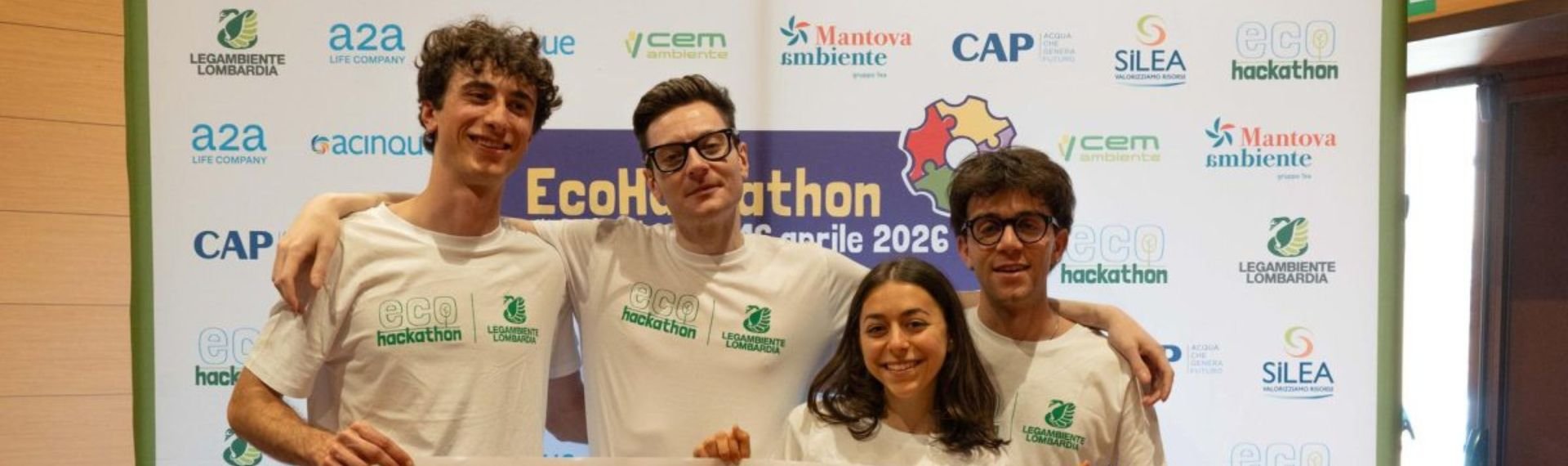
A group of students from the Politecnico di Milano, members of the Resilient Gap association and enrolled in Environmental Engineering and Automation Engineering programs, has won the EcoHackathon for the second consecutive year. The initiative, promoted by Legambiente, focuses on sustainability and the development of innovative solutions for responsible environmental management.
The winning team designed an urban heat management project with a strong emphasis on social inclusion. The proposal involves the development of a pilot project for fifth-generation district heating and cooling in the city of Pavia, inspired by the model of Renewable Energy Communities (RECs) for electricity.
Key features of the project include system electrification, mitigation of heatwaves, stabilization of the electrical grid through the use of thermal storage, and recovery of waste heat—namely unused heat generated by industrial and commercial activities.
At the same time, a central element of the proposal is social inclusion and the fight against energy poverty, with particular attention to reducing costs for users. This would be achieved through innovative pricing methods and by allocating part of the revenues to a fund aimed at supporting adoption by lower-income households.
All of this would make it possible to avoid the emission of tens of thousands of tons of carbon dioxide each year, contributing to the achievement of the municipality’s emission reduction targets set out in the SECAP (Sustainable Energy and Climate Action Plan).