
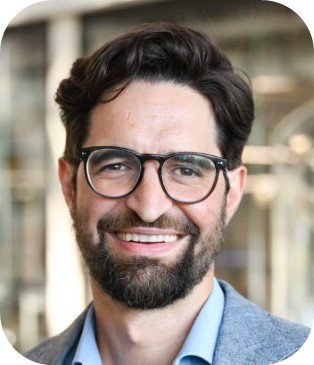
Speaker: Prof. Manuel Rausch
25 Maggio 2026 | 14:30
DEIB, Aula BIO1 (Ed. 21)
On line by Webex
Contatti: Prof. Monica Soncini
Sommario
On May 25th, 2026, at 2:30 pm the seminar on "Image-Based Mechanical Phenotyping of Blood Clots: Toward Patient-Specific Interventions" will take place in DEIB BIO1 Room (Building 21).Thromboembolic diseases claim one in four lives worldwide, yet treatment remains frustratingly one-size-fits-all. Whether a clinician chooses thrombolysis, mechanical thrombectomy, or a combination depends largely on anatomy and timing — rarely on the mechanical properties of the clot itself. This is a missed opportunity: clot stiffness, fracture toughness, and composition directly govern whether a clot will dissolve, break off, or yield to a retrieval device.
In this talk, I present work from our laboratory aimed at building a quantitative understanding of blood clot mechanical properties and their determinants. I will show that clot stiffness and fracture toughness depend strongly on donor sex, hematocrit, fibrinogen, and specific white blood cell subtypes — suggesting that standard blood panels already encode meaningful information about a patient's clot mechanical phenotype. I will further show that tPA-induced lysis significantly reduces both stiffness and fracture toughness, raising the clinically important possibility that thrombolytic therapy may predispose clots to secondary embolization while simultaneously easing mechanical removal.
The second half of the talk addresses a central translational challenge: how do we access clot properties non-invasively before intervention? I will present our MRI-based phenotyping framework, in which radiomic analysis of standard clinical stroke sequences discriminates RBC-rich from fibrin-rich clots with AUCs exceeding 0.90. I will then present new data directly linking MRI radiomic features to measured mechanical properties, and close with preliminary results from in vitro thrombectomy experiments — the first steps toward a framework in which pre-treatment imaging informs not just whether to intervene, but how.
Click here for the online connection.
Biografia
Manuel Rausch is an Associate Professor and Associate Chair in the Department of Aerospace Engineering and Engineering Mechanics at the University of Texas at Austin, with affiliate appointments in Biomedical Engineering, Mechanical Engineering, and the Oden Institute for Computational Engineering and Sciences. His research sits at the intersection of solid mechanics, biomechanics, and computational modeling, with a focus on soft biological tissues including blood clots, heart valves, and the vasculature.Rausch leads the Soft Tissue Biomechanics Laboratory, whose work spans experimental characterization, constitutive modeling, and image-based methods to understand how soft tissues deform, fracture, and remodel in health and disease. While the lab works across a range of tissues and disease contexts, a current focus is the mechanics of intravascular blood clots and their relevance to thromboembolic disease diagnosis and treatment.
His work has been recognized by an NSF CAREER Award, an American Heart Association Career Development Award, and a General Dynamics Endowed Fellowship, among others. He holds NIH R01 funding for research on tricuspid valve mechanics and has received support from the Office of Naval Research, the National Science Foundation, and the Congressionally Directed Medical Research Program.