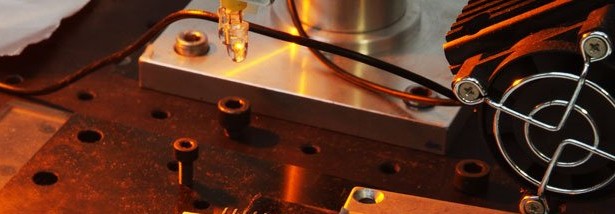
The Dipartimento di Elettronica, Informazione e Bioingegneria (DEIB) currently hosts more than 50 labs for Computer Science and Engineering, Systems and Control, Electronics, Telecommunications, Electrical Engineering, Bioengineering.
Furthermore, the Department promotes, in collaboration with various departments of Politecnico di Milano, more than 20 interdisciplinary, and interdepartmental laboratories, and large infrastructures for advanced interdisciplinary studies.
Professional technicians continuously update the laboratory infrastructures and assist researchers and students.
Furthermore, the Department promotes, in collaboration with various departments of Politecnico di Milano, more than 20 interdisciplinary, and interdepartmental laboratories, and large infrastructures for advanced interdisciplinary studies.
Professional technicians continuously update the laboratory infrastructures and assist researchers and students.